SAVOURY
As you may already know, Argentina has one of the best beef qualities in the world. Wide fields full of cattle, known as the Pampas, make us an exporter and one of the biggest consumers of meat per capita. Now, pair that with a fragrant mid-body red wine, could be a Malbec or a Cabernet Fran, and you’ll have the best combo ever! Eating in Buenos Aires or I could say, in Argentina, is very traditional. Argies don’t use many spices or big flavours, they are not very experimental with the food, but what they do, they do it great.
You could try 20 empanadas in 20 different shops or provinces, and they will all taste differently.
Empanadas a sort of Cornish pasty and usually you will order for delivery in dozens or half a dozen. The most popular flavours go from beef which can be mince or hand cut -my favourite- to capresse, onion and herbs, humita (corn) and ham and cheese. I was surprised to find some shops offering new flavours such as “hamburger” empanada. Bbq pork and stuff like that. In comparison to empanadas from our countries, Argentinean ones are healthier, as they are oven baked and not fried, but if by any chance you come across anywhere that sells friend empanadas, get one! I Love fry beef empanadas, they are so juicy and yummy, omg, I’m salivating already!
Also, each province in Argentina has a different approach to empanadas, some change in flavour, sometimes in size. Salta is famous for having the best empanadas in the country; they are usually smaller and super juicy. Some provinces use chopped green olives, some raisins, some potato cubes, some boiled egg, in the northeast, another form of empanada -but breadless- which is very famous is the humita en chala, this is a creamy corn and cheese preparation wrapped in corn leaves.
The pizzas in Argentina are very different to what you may be used to. They don’t look like a typical Italian pizza, maybe more like a Milano pizza or deep dish. We use exorbitant amounts of cheese. The pizza culture is emblem, specially in the capital, Buenos Aires, and particularly in the microcentro, where you will find the classic pizzerias that even have a queue to get in and are open until very late hours. You can always choose the quick and cheaper option and eat standing at the front bar if you don’t want to wait for a table. For portenos, this is our fast food. Just stop for 10 mins on a busy day and have a slice or two “de dorapa” -standing-.
The most famous pizza restaurants are located near the theatre precint over Calle Corrientes, although there are some other excellent ones nearby and further away. My favourite flavours to try are: mozzarella -we call it muzza-, spinach and bechamel and fugazetta. Let’s break this down one by one! Why do we call it mozzarella? I have no clue and it doesn’t make any sense! For us the Margherita pizza doesn’t exist, the classic pizza is dough, a good amount of tomato sauce and heaps heaps of mozzarella cheese, topped with a few green olives and oregano oil, to make the pizza look even more greasy -as if that was needed!-. The spinach and bechamel is something I haven’t seen anywhere else in the world, but is so delicious, more like a savoury pie though, is a pizza dough topped with spinach and a creamy bechamel sauce that gets crunchy and burned when they reheat it in the oven. The Fugazza and Fugazzeta are two different things but very much related to the porteno pizza culture. A Fugazza is a simple pizza dough with crispy onions and oregano but no cheese. And a Fugazzetta has all the cheese than the latter was missing! Some people call it Fugazzetta rellena or just fugazetta and is a stuffed pizza with cheese inside and out and topping of crispy onion and oregano.
We can’t close the pizza topic without talking about Faina. Many foreigners would have no idea what that is, and many people outside if the Buenos Aires city wouldn’t know either! Faina came to be as derived from the farinata, a type of chickpea flower cake from the north of Italy. Somehow, it end up as an addition to the pizza, as if wheat flour wasn’t enough calories! In Argentina, Faina is order by portions and it’s placed under the pizza slice of choice and eaten all together. Crazy, right?
Tips: pizzas in Argentina are big, and even the “small” is big. Because of the amount of cheese on the pizzas I’d recommend you to go slowly, order a few portions or 2 small ones and see how you go, but don’t order a whole pizza for yourself, it will be too much!
Going back to the “golden child’ a must have in Argentina is Asado. Asado is any meat cooked on the coals or parrilla. Therefore, you can find asado in a Parrilla restaurant and if you want a mix grill you will call it “parrillada”. A classic parrillada will have asado de tira -beef ribs, can be short, big or banderita which is the extra short-, morcilla -black pudding-, chorizo -not spicy sausage-, chicken, and maybe vacio -hanger steak, similar to brisket but cut in a different way-. If done right your parrillada will come with two sauces; salsa criolla and chimichurri and a breadbasket. And a very important warning, in Argentina you will always pay “cubierto’ or table charge, specially if they service includes breadbasket, oil and vinegar -this is not a tip and it does NOT go towards the servers-.
Other cuts of meat that you MUST TRY but usually are not part of the parrillada but you can either order separately or order a la carte are: Entrana -skirt steak, my favourite-, Bife de chorizo -not related to the chorizo sausage at all, this is sirloin steak- and Ojo de bife -filet mignon-. If you still have space for one more thing, add a Provoleta, provolone cheese with herbs that is semi melted on the coals, an absolute banger, put some of the sauces on top and you’ll be in heaven.
Other traditional additions to the mix grill that I’d found more challenging to find in my last stay in Buenos Aires but that are worth to try are achuras. Achuras can be consider the offal but it’s also chorizo. Morcilla -black pudding-, chinchulines -small intestine-, molleja -sweatbread- salchicha parrillera and chori are an essential part of the Asado experience.
Other meats that can be found cooked “a la parrilla” are matambre de cerdo -a thin pork cut- that if it’s well, it’s amazing, for example it was the start on our wedding lunch. Also, Lechon -usually for a Christmas o NY celebration-, Cordero -Patagonian lamb is delicious and a must try if you visit those lands-, Spatchcock chicken -can be found specially on food trucks on the side of the road out of the capital or informal parrillas in the suburbs- and my ultimate favourite is Chivito -not related to the Uruguyan sandwich called chivito, this is actually the animal Chivo or Goat- and is a specialty in some provinces like San Luis, San Juan or Mendoza, so if you go to Termas de Cacheuta in Mendoza where there are many parrillas around the venue, don’t miss out the chance to try it as it is delicious.
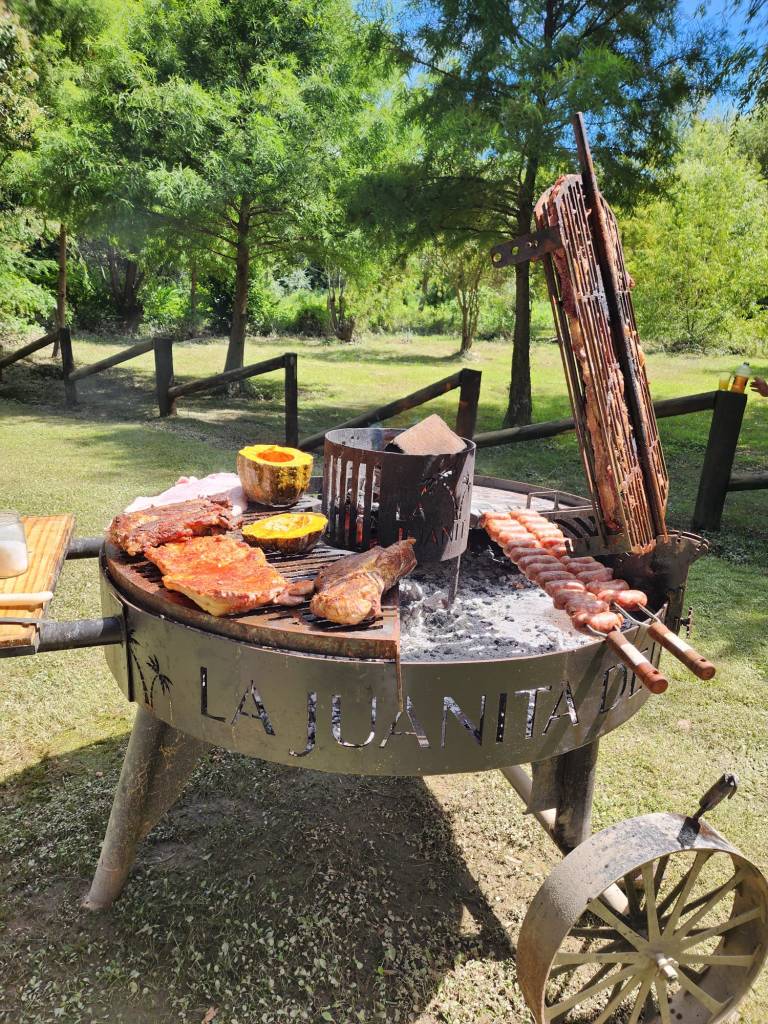
Not all asados will taste the same. The skill of the asador, the quality of the meat, the type of fire used to cook will influence a lot in the final result. Is not the same an asado cooked on charcoal, than one cooked with firewood. Not the same an asado cooked a la cruz, or in a traditional parrilla, not the same grassfed beef than feedlot.
Remember to request the beef temperature the way you like as the Argie style is a mid well to well done.
Yeah, yeah, wine, beef, empanadas, pizza, we all know about that. But I’m a sweet tooth so I will tell you what I love about being back to Buenos Aires, so you can go and try it yourself.
Sweets
“La panaderia”, The bakery.
Our bakeries open early, they cook fresh products every night onsite, so every time you step in, the smell will wrap you and take you for a dance, the dance of the carbs. Traditionally we don’t eat facturas -pastries- during the week, this is more of a treat reserved for a weekend morning or afternoon.
In Argentina you will find pastries and Danishes topped or filled with Dulce de leche, quince paste or pastry cream, some others are plain and some just sprinkled with sugar. The croissants known as medialunas (half moons) are sweeter and coated with sugar syrup, more bready than crunchy, like a brioche dough, and ideal to dunk in the coffee. But if you want the crunch experience, you should try “medialunas de grasa” which are very thin croissants made with lard instead of butter and neutral in flavour, some people calls them “savory croissants” but they aren’t really savory at all.
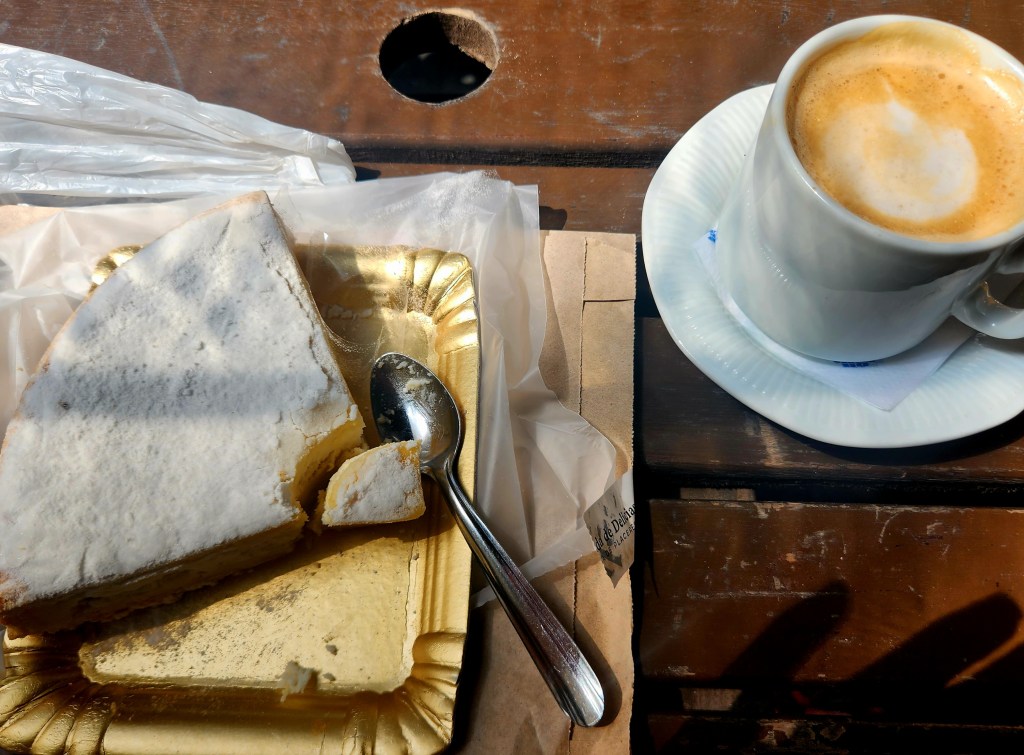
My number one love though, is the ricotta tart. This is a very Sicilian cake, like a casatta al forno, and I can’t get enough of it. Usually, you will find a variety of traditional sweet tarts such as the ricotta tart, Quince paste tart and the coco and dulce de leche tart -absolute must try-.
If you are not a sweet tooth like me, you should try the “sanguches de miga” because we don’t really pronounce it sandwich! These sandwiches are made with only the soft part of the bread, not the crust, and can be simple, triple or special. Often, you’ll have simple’s like ham and cheese or egg and cheese. Triple will be bread ham, bread, cheese, bread, ham, and it can be pretty much any flavour, black olives, cheese and egg, tuna and lettuce, etc but the ones with more special or crazy flavours are called special, such as blue cheese and palm hearts, black olives, cheese and egg, tuna and lettuce, arugula and chicken, etc.
Because I think being a sweet tooth also includes any type of breads or carb form I want to tell you about my other passion, Argentinean bread. Man, we do a good bread. I don’t know if it’s because in Australia, where I live, is so hard to find freshly made bread that doesn’t cost a fortune or because bread in Argentina is particularly good, but I really miss it over here. Anyways, besides the regular bread that is amazing such as Pan frances or mignon, my favourites are the one with a bit of lard (yum!) such as Cremona, a star shaped bread that has layers of lard and butter making it crispy on the outside and soft inside or libritos, same concept but in square or “little book’ shapes, this are ideal to eat with mate either for breakfast or afternoon tea and a little bit of cream cheese or dulce de leche.
Helados -Ice cream.
Two countries In the world make the best Ice cream: Italy and Argentina. I think that in comparison, Argentinean Ice cream is airier than gelato, but as good in flavour and quality ingredients.
I could eat helado every day -and I probably did while I was there-. Is just something I could never get tired of, there is always a different flavour to taste or even the same flavour but from a different shop.
Some typical Argy flavours that you must try are: all the chocolates -we do a few in each ice cream shop-, Tramontana -cream base, choco chips and dulce de leche-, Sambayon -a derived from the Italian desert Zabaglione that has a distinctive taste of Marsala wine-, Kinotos al whisky -qumquat with whisky, Frutos del bosque -berries and cream, Flan and Super dulce de lech – dulce de leche cream with swirl of dulce de leche- and all it’s other variations such as coconut with dulce the leche, banana with dulce de leche, etc.
Our best known sweet is Alfajores, two cookies filled with dulce de leche and coated in chocolate. No doubt about it. I could say maybe, that our best know sweet thing is Dulce de leche, but that sounds weird as DDL always goes paired with something. Yes, is a fact that we do eat DDL straight from the jar but don’t want to be famous for that, right? Anyways, at this point in the reading you can tell we put DDL in everything. My dad even used to make banana and dulce de leche sandwiches… yes, with bread, bless him.
Pretty much every item in the almacen -grocery shop- or kiosko has dulce de leche in it. I will give you a list of my favourite ones with and without DDL: Alfajores, there are as many flavours as colours of the rainbow, I love the mousse filled Alfajores and my husband loves the ones coated in icing, there are some others with quince paste or with dulce de leche and rhum, or cognac, others with almond cookie or white chocolate coating.
We found some very good artisanal brands in Mendoza that aren’t the commercial ones we’ve seen in Buenos Aires like Alfajor Entre Dos y Chocolezza. If you are only staying in Buenos Aires, try some places off the beaten path like Rapanui that has amazing ice cream, a great variety of Alfajores and other products like chocolates or chocolate coated frozen raspberries. The usual brands that we get in the kiosko or drugstore were a bit disappointing, the quality has gone down really bad, but some new brands have appeared, and they are bringing good flavours such as Guolis or Alfajor rasta. If you want to buy boxes to take home and you only have the regular brands available stick to Martinez, Havanna or Cachafaz.
I want to hear your opinion if you had try any new brands, many in other provinces and what do you think about them? LEAVE ME A COMMENT!
 World Bound
Deja un comentario